

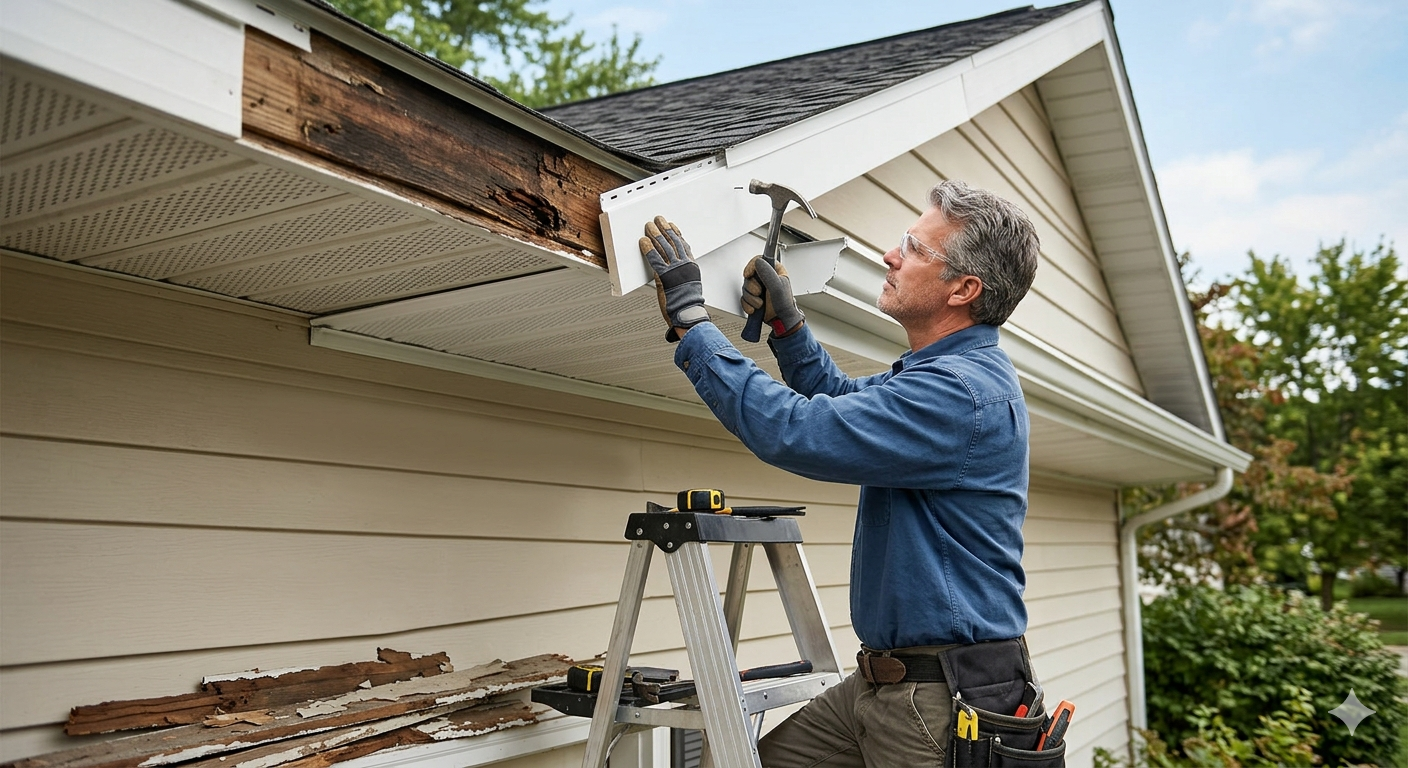
Soffit and fascia boards are essential parts of your roofing system. They protect your home from moisture, pests, and structural damage while also supporting proper ventilation and roof aesthetics. When these components become damaged, timely repair is necessary to avoid expensive roof problems.
This guide explains how to repair damaged soffit and fascia boards step-by-step in a clear and practical way.
What Are Soffit and Fascia Boards?
Before repairing them, it is important to understand their function.
Soffit
The soffit is the underside of the roof overhang. Its primary role is to provide ventilation to the attic and prevent moisture buildup. It also helps block pests such as birds, insects, and rodents from entering the roof structure.
Fascia
The fascia board is the vertical finishing edge attached to the ends of the roof rafters. It supports the gutter system and gives the roofline a clean, finished appearance.
Together, soffit and fascia protect the roof edge and help maintain proper airflow and structural stability.
Common Causes of Soffit and Fascia Damage
Soffit and fascia boards can become damaged due to several factors, including:
- Water leaks and roof drainage issues
- Wood rot caused by prolonged moisture exposure
- Pest infestations such as termites or rodents
- Strong winds and storm damage
- Poor attic ventilation
- Aging or low-quality materials
If these issues are not addressed early, they can lead to severe structural damage.
Step 1: Inspect the Damage Thoroughly
Start by carefully inspecting the soffit and fascia areas.
Look for signs such as:
- Cracked or peeling paint
- Soft, rotting wood
- Sagging or warped boards
- Gaps along the roof edge
- Mold or mildew growth
- Entry points for pests
A proper inspection helps determine the extent of the damage and whether repair or full replacement is needed.
Step 2: Gather Tools and Materials
Before starting the repair work, make sure you have the right tools and materials:
- Replacement soffit panels or fascia boards
- Hammer or nail gun
- Measuring tape
- Saw (hand saw or circular saw)
- Pry bar
- Screws or galvanized nails
- Exterior-grade paint or sealant
- Safety gloves and goggles
- Ladder or scaffolding
Using durable, weather-resistant materials ensures long-lasting results.
Step 3: Remove the Damaged Sections
Carefully remove the damaged soffit or fascia boards.
Removal process:
- Use a pry bar to loosen damaged boards
- Remove nails or screws carefully
- Avoid damaging surrounding roof components
- Inspect hidden areas for additional rot or damage
- Clean the area before installing new materials
If underlying wood is also damaged, it must be repaired before proceeding.
Step 4: Repair the Underlying Structure
In many cases, damage extends beyond the visible boards.
Structural repair includes:
- Replacing rotted wood sections
- Strengthening weakened rafters or supports
- Treating wood with anti-rot or anti-fungal solutions
- Ensuring the surface is dry and stable
This step is important for ensuring long-term durability of the repair.
Step 5: Install New Fascia Boards
Once the structure is ready, install the new fascia boards.
Installation steps:
- Measure and cut boards to the correct size
- Align boards along the roof edge properly
- Secure using galvanized nails or screws
- Ensure boards are straight and level
- Seal joints to prevent water intrusion
Proper installation is important because fascia supports the gutter system and protects roof edges.
Step 6: Replace or Repair Soffit Panels
After fascia installation, move on to soffit repair.
Soffit installation process:
- Measure and cut soffit panels accurately
- Fit panels under the roof overhang
- Secure panels while maintaining ventilation gaps
- Ensure airflow vents are not blocked
- Replace any damaged vented sections
Proper soffit installation ensures good attic ventilation and reduces moisture buildup.
Step 7: Seal and Finish the Repair
Finishing work is essential for protection and appearance.
Final finishing steps:
- Apply weatherproof sealant to all joints
- Paint with exterior-grade paint for protection
- Seal gaps to prevent water and pest entry
- Ensure a clean and uniform appearance
This step improves durability and enhances curb appeal.
Step 8: Final Inspection and Maintenance Tips
After completing the repair, perform a final inspection:
- Check alignment and stability
- Ensure there are no gaps or loose boards
- Confirm proper ventilation airflow
- Inspect gutter attachment if applicable
Maintenance tips:
- Inspect soffit and fascia twice a year
- Clean gutters regularly to prevent overflow
- Repaint every few years to protect materials
- Monitor for early signs of water damage
- Trim nearby trees to prevent pest access
When to Call a Professional
Some soffit and fascia damage requires professional attention.
You should contact a roofing contractor if:
- There is extensive wood rot or structural damage
- Roof leaks are present in multiple areas
- The roof edge is difficult or unsafe to access
- Pests continue to return after repairs
- Gutter systems are also damaged
Professional repair ensures safety, quality, and long-term protection.
Conclusion
Repairing damaged soffit and fascia boards is essential for maintaining a strong and well-protected roofing system. By identifying damage early and following a structured repair process, homeowners can prevent costly structural issues and extend the life of their roof.
Regular inspection and maintenance ensure your soffit and fascia remain in good condition, protecting your home from moisture, pests, and weather damage.