

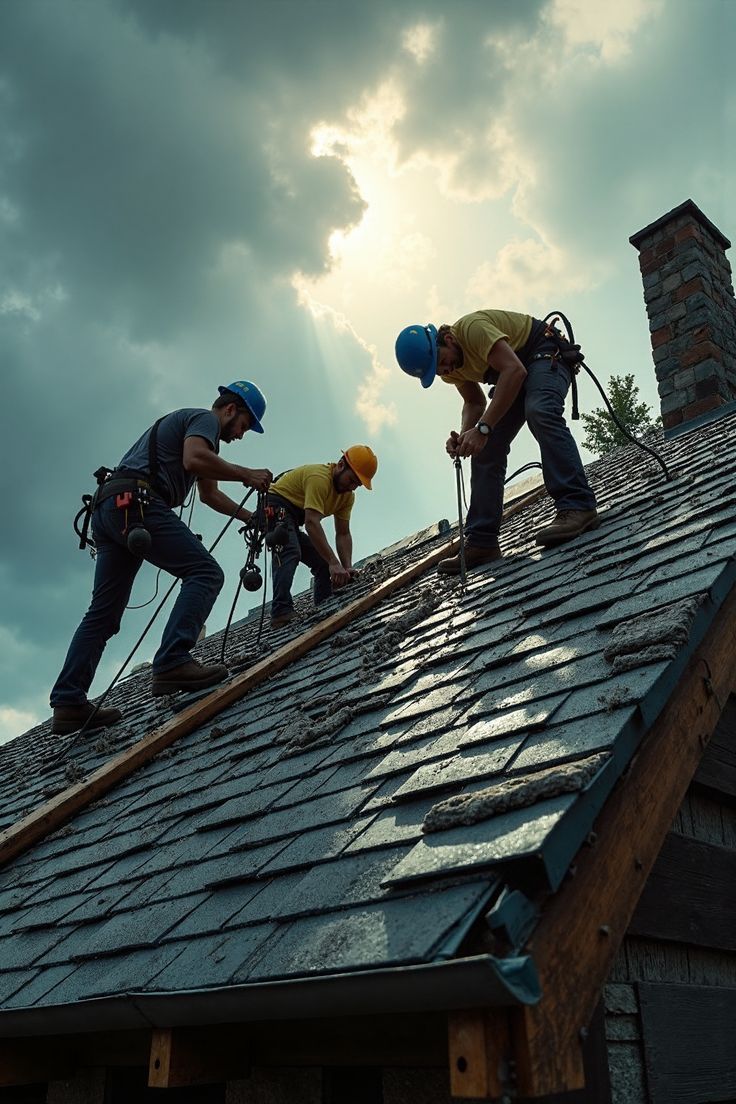
Hail the size of marbles battering the roofline for ten straight minutes. Wind gusts strong enough to peel shingles back like paper. A slow, steady rain that finds its way through a spot no one knew was vulnerable. Storms have a way of exposing every weakness a roof has been hiding, and knowing what to look for afterward can help homeowners respond quickly and protect their home from further damage with the right storm damage repair.
In this guide, Hellenic Roofing & Construction walks through the most common types of storm damage, how to decide between repair and replacement, and what to expect from the inspection, insurance, and repair process.
Why Prompt Storm Damage Repair Matters
After a storm passes, it’s easy to assume that if there’s no obvious leak, the roof came through fine. But storm damage is often more extensive than it first appears from the ground. A cracked shingle or bruised section from hail can fail completely with the next rain. A small area of wind-lifted shingles can let water in gradually, causing hidden damage to decking and insulation long before a stain shows up on the ceiling. Getting a professional inspection soon after a storm, and filing any needed insurance claim promptly, helps homeowners avoid the larger repairs that often follow when storm damage is left unaddressed.
Common Types of Storm Damage
Wind Damage
High winds can lift, crease, or completely tear shingles from the roof deck, especially along edges, ridges, and corners where wind pressure is strongest. Even shingles that appear intact after a windstorm may have loosened seals that leave them vulnerable to the next weather event.
Hail Damage
Hail impact often leaves bruising or small cracks in shingles that aren’t always visible from the ground. This damage can compromise a shingle’s ability to shed water, leading to leaks that may not appear until well after the storm has passed.
Roof Leaks After Heavy Rain
A leak that appears during or shortly after a storm is often traced back to damaged shingles, compromised flashing, or a weak point that heavy, wind-driven rain was able to exploit. Locating the exact entry point typically requires a thorough inspection, since water can travel before it becomes visible indoors.
Fallen Tree Limbs and Debris Impact
Branches and debris carried by high winds can puncture shingles, crack decking, or dent metal roofing components. Even relatively minor-looking impact damage can compromise a roof’s ability to keep water out.
Granule Loss from Heavy Rain and Hail
Intense storms can accelerate granule loss on asphalt shingles, reducing their protective capability. This is often one of the more subtle forms of storm damage, since it doesn’t always cause an immediate leak but shortens the roof’s remaining lifespan.
Gutter and Flashing Damage
Storms can bend, detach, or clog gutters and downspouts, and can dislodge flashing around chimneys and vents. When water can’t drain properly away from the roofline, it increases the risk of leaks and water intrusion around the home’s foundation as well.
Repair vs. Replacement: How to Decide
One of the most common questions homeowners face after storm damage is whether a repair is sufficient or whether the roof needs a full replacement. A few factors typically guide this decision:
Extent and Location of the Damage Isolated damage, like a section of missing shingles in one area, is often a straightforward repair. Widespread damage across the majority of the roof, or damage affecting the decking itself, tends to favor replacement.
Age of the Roof at Time of the Storm A newer roof with isolated storm damage is usually a strong repair candidate. An older roof that’s already nearing the end of its expected lifespan may be better replaced, especially if storm damage accelerates existing wear.
Insurance Coverage In many cases, homeowner’s insurance covers storm-related roof damage, which can make replacement a more accessible option even for damage that might otherwise call for a simpler repair. A qualified contractor can help document damage thoroughly to support your claim.
Risk of Recurring Issues If a roof has sustained repeated storm damage over the years, a full replacement with more durable materials can reduce the likelihood of the same damage recurring in future storms.
A thorough inspection from an experienced roofing contractor, ideally one familiar with insurance documentation, is the best way to determine which path makes sense for your specific roof and situation.
What to Expect During the Storm Damage Repair Process
1. Emergency Assessment If there’s an active leak or exposed section, a contractor can provide emergency mitigation, such as tarping, to prevent further damage while a full repair plan is arranged.
2. Detailed Inspection and Documentation A thorough inspection identifies all storm-related damage, with photos and documentation that can support an insurance claim if one is being filed.
3. Insurance Claim Support Many roofing contractors can work directly with your insurance adjuster, providing the documentation needed to help ensure the claim accurately reflects the full extent of the damage.
4. Repair or Replacement Once the scope of work is approved, the contractor completes the necessary repair or replacement using materials suited to withstand future weather events.
5. Final Inspection After the work is complete, the roof is inspected to confirm it’s properly sealed, structurally sound, and ready to perform through the next storm.
Preventing Future Storm Damage Problems
- Schedule a professional roof inspection each year, ideally before storm season begins
- Trim back tree branches that could fall on or scrape the roof during high winds
- Keep gutters and downspouts clear so water can drain properly during heavy rain
- Have minor pre-existing damage repaired promptly, since it’s often what fails first in a storm
- Document your roof’s condition with photos before storm season for easier insurance comparison later
How to Choose the Right Storm Damage Repair Company
Not every roofing company brings the same level of expertise to storm damage and insurance claims. When choosing a provider, consider the following:
- Thorough Documentation — A trustworthy company documents damage carefully to support an accurate insurance claim.
- Insurance Claims Experience — Familiarity with the claims process helps ensure nothing gets missed or undervalued.
- Fast Response Times — Storm damage often requires urgent attention, especially when there’s an active leak.
- Licensed and Certified Roofers — Factory-trained, certified, and experienced roofers bring added confidence to storm repair work.
- 24/7 Emergency Availability — Storms don’t wait for business hours, and a company offering emergency service can prevent damage from worsening overnight.
Frequently Asked Questions
How soon after a storm should I get my roof inspected? As soon as it’s safe to do so. Getting an inspection promptly helps catch damage before the next rain and supports a timely insurance claim if needed.
Will my insurance cover storm damage to my roof? In many cases, yes, though coverage depends on your specific policy and the cause of the damage. A contractor experienced with insurance claims can help document the damage to support your claim.
How can I tell if my roof has hail damage? Hail damage isn’t always visible from the ground and can include bruising or small cracks in shingles. A professional inspection is the best way to identify hail damage accurately.
What should I do if my roof is actively leaking after a storm? Contact a roofing contractor as soon as possible for emergency mitigation, such as tarping, to prevent further water intrusion while a full repair is arranged.
How do I know if storm damage requires a repair or a full roof replacement? It depends on the extent of the damage, the age of the roof, and your insurance coverage. A contractor can assess the damage and help you understand which option makes the most sense.
Can wind damage a roof even if shingles don’t visibly blow off? Yes. Wind can loosen shingle seals without fully detaching them, leaving the roof vulnerable to leaks and further damage in future storms even though everything may look intact from the ground.
Final Thoughts
Storm damage can affect a roof in ways that aren’t always obvious right after the weather clears, and waiting to address it often turns a manageable repair into a much larger problem. Understanding the common types of storm damage, knowing how to weigh repair against replacement, and getting a prompt professional inspection all help homeowners protect their home and navigate the insurance process with confidence.
Whether your roof just came through a major storm or you want a professional assessment for peace of mind, Hellenic Roofing & Construction is ready to help — serving Houston, Conroe, The Woodlands, Spring, Cypress, Kingwood, Montgomery, Katy, and the surrounding Texas area.